
How AI Photo Booth Experiences Work at Live Brand Events
You step in front of a camera at a brand event and take an ordinary photo. A few seconds later, you’re looking at yourself as the cover star of a magazine, standing inside a futuristic product world, or featured on a custom trading card designed for the campaign.
That is the appeal of an AI photo booth. It takes a normal guest photo and uses generative AI to turn it into something completely new. For brands, the interesting part is what happens around that image: how quickly guests move through the experience, how the concept reflects the campaign, whether people share the result, and whether the activation can capture useful first-party data.
If you’re considering an AI photo booth for a live event, here’s what the experience looks like from the guest’s first interaction to the final image, plus what you should look for before booking one.
What Is An AI Photo Booth?
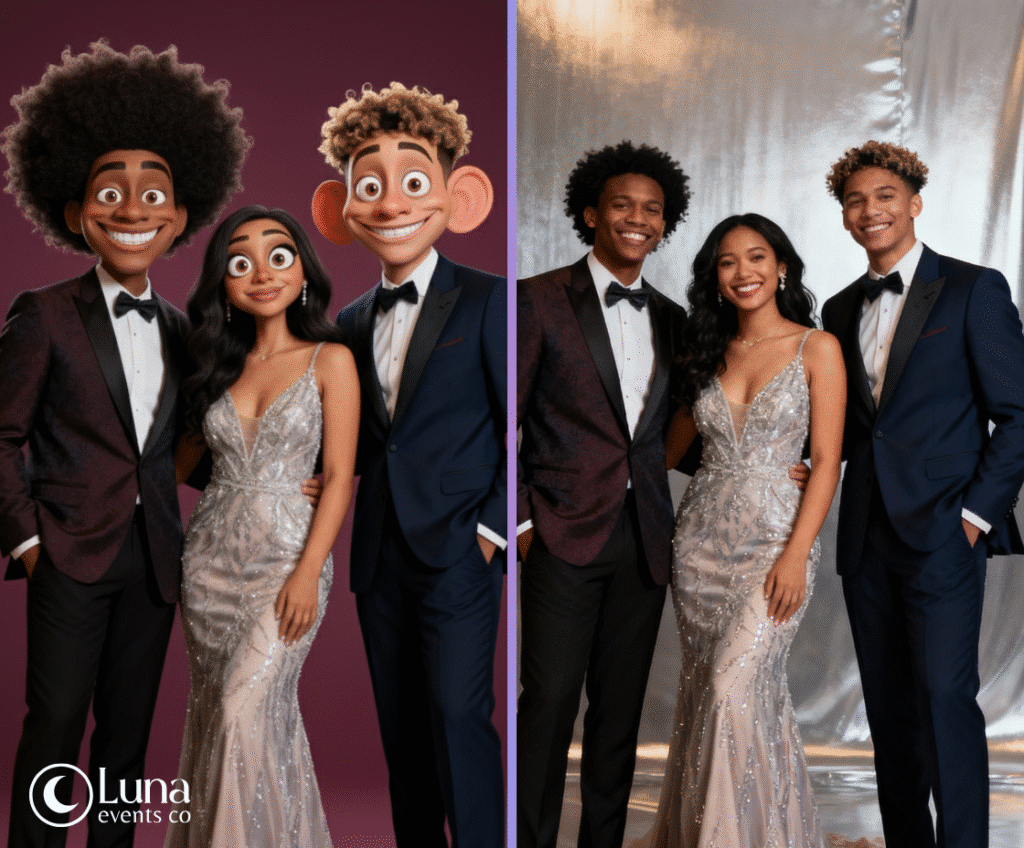
An AI photo booth uses a camera or smartphone to capture a guest and generative AI to transform that image according to a specific creative concept. Instead of simply placing a logo or decorative frame over the photograph, the AI can change the setting, styling, atmosphere, clothing, graphics, and overall visual treatment.
Think about the difference between taking a photo at an event and becoming part of the event’s creative world.
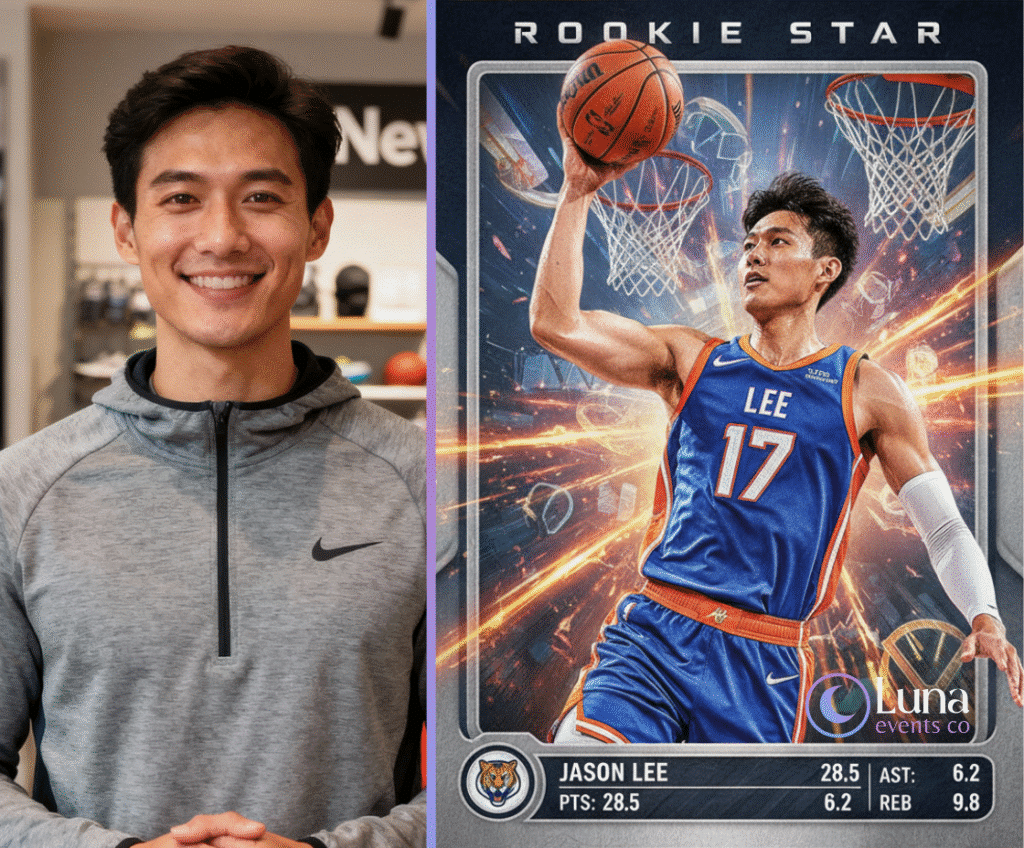
At a product launch, you might appear inside a futuristic version of the product environment. At a sports activation, you could become a collectible trading card. At a fashion event, your image could be transformed into an editorial cover.
The technology is interesting, but the creative concept is what makes people stop and participate.
How Does An AI Photo Booth Work?
From the guest’s perspective, the process is surprisingly simple. You choose an experience, take a photo, watch the AI transformation happen, and receive the finished image.
Behind that simple interaction, several pieces of technology work together.
1. You Choose Your AI Experience
The first screen usually presents a small number of creative options. You might see concepts such as:
- Future Tech
- Magazine Cover
- Sports Trading Card
- Fantasy World
- Retro Campaign
- Branded Product World
Limiting the choices is important. Giving guests 20 different styles might sound impressive, but it can slow down the line and make the experience harder to understand.
For a live brand event, two or three strong concepts will often create a cleaner experience than a huge menu of options.
2. You Take Your Photo
Next, you pose for the camera.
This might happen at a physical kiosk with professional lighting, or through a QR-powered web experience where you use your own phone. The setup you choose depends on the event, venue, guest volume, and how much control you want over the final image.
Good lighting and clear instructions matter here because the original photo becomes the starting point for the AI generation.
3. The AI Creates Something New
This is where an AI photo booth separates itself from a traditional photo booth.
Your original photograph is processed through an AI workflow designed around the selected concept. The system can reinterpret the background, clothing, environment, colors, graphics, and visual style while keeping you recognizable.
For example, imagine a sports brand running a fan activation. Instead of giving you a standard event photo, the booth could transform you into a fictional athlete trading card using the campaign’s visual language.
The output becomes something you are much more likely to save and share because it feels personal.
4. You See The Result
The finished image appears on screen.
If you love it, you can move straight to delivery. If something went wrong, you may be able to retake the photo or select another experience.
This review stage is important for live events because AI-generated images can occasionally produce unexpected results. The creative should be tested before the event, and the system should have appropriate safeguards and moderation in place.
5. You Get The Image
The final image can be delivered digitally through a QR code, email, or text message. Some setups can also print the image immediately.
That gives you something to take away from the event while giving the brand another opportunity to reinforce its campaign through the image itself.
What Makes An AI Photo Booth On-Brand?
This is where the quality of the activation is usually decided.
Putting a logo on an AI-generated image does not automatically make it a branded experience. The creative should be built around the campaign from the beginning.
Your brand could influence the:
- Color palette
- Background and environment
- Typography and graphics
- Product placement
- Character styling
- Image format
- Campaign messaging
- Final delivery design
You could even create a completely fictional world around a product launch.
For example, a technology company could let attendees step into a futuristic city inspired by its new product. A fashion brand could turn guests into magazine cover stars. A beverage company could create a surreal world based on a new flavor.
The guest gets a personalized image. The brand gets a piece of content that carries the campaign beyond the event.
Kiosk Or QR Code: Which AI Photo Booth Setup Is Better?
There are two common ways to run an AI photo booth at a live event: a physical kiosk or a web-based QR experience. Neither is automatically better. The right choice depends on how many people you expect and how much control you want over the experience.
- A physical kiosk gives you a dedicated activation point with a camera, screen, lighting, and potentially a printer. It works well when you want the booth to become a visible part of the event and attract attention from people walking past.
- A QR-based experience allows guests to use their own phones. This can be useful when you need to scale across a large venue or several areas without installing multiple physical booths.
For a high-profile brand activation, you can also combine both. A main kiosk creates the visual focal point, while QR access gives additional guests a way to participate without waiting in the main queue.
Can An AI Photo Booth Generate Leads?
It can, and this is one of the biggest reasons brands use AI experiences at corporate events.
Instead of simply handing over a photo, you can ask guests for an email address or other qualifying information before delivering the final image. With the right integration, those contacts can then be exported or sent into your CRM or marketing platform.
The key is keeping the exchange worthwhile.
If someone wants their personalized image, asking for an email address can feel reasonable. Asking them to complete a long form before they see the result can kill the experience.
You should also make your consent process clear. Guests should understand what information you’re collecting, why you’re collecting it, and whether they are separately agreeing to marketing communications or social sharing.
How Much Does An AI Photo Booth Cost?
AI photo booth pricing varies considerably because you are often paying for an experience rather than just a piece of equipment.
The biggest factors include the amount of creative customization, event duration, guest volume, staffing, hardware, printing, lead capture, analytics, and technical requirements.
A custom campaign might involve developing several AI styles specifically for your brand. You may also need an attendant, branded booth structure, backup connectivity, custom graphics, CRM integration, or multiple stations.
That means comparing providers purely by rental price can be misleading. Ask what is included in the complete guest experience and what you would need to arrange separately.
What Should You Plan Before Your Event?
The best AI photo booth experiences are planned around the event rather than added to the floor plan at the last minute.
Start with one simple question: What do you want someone to do after they see their image?
Maybe you want them to share it. Maybe you want their email. Maybe the goal is simply to create a memorable product interaction.
That objective should influence everything from the AI concept to the delivery method.
You should also confirm:
- How many guests you expect during peak periods
- How much physical space is available
- Whether reliable internet and power are available
- Whether you need a staffed kiosk
- Whether images need to be printed
- What data you want to collect
- How consent will be handled
- How long images and personal information will be stored
- What happens if the internet connection fails
If you’re planning an outdoor Central Valley event, add weather, direct sunlight, temperature, power, and connectivity to the checklist. A setup that works perfectly inside a conference venue may need additional planning for an outdoor activation.
Common Mistakes to Avoid
An AI photo booth can look incredible in a demonstration and still underperform at a live event if the guest journey has not been properly planned. These are some of the most common problems to catch before production.
- Choosing a generic AI effect: A fun transformation can attract attention, but if it could belong to any brand, it does little for your campaign. Build the concept around your actual brand and event objective
- Offering too many choices: A long list of AI styles slows decision-making and creates queues. Start with a small number of strong concepts
- Ignoring processing time: A beautiful result is not useful if guests are waiting several minutes. Test the complete experience under realistic event conditions
- Collecting too much information: Long forms reduce participation. Ask only for the data you genuinely need
- Skipping AI testing: AI can produce inconsistent or unexpected results. Test the approved styles with different people before the event
- Treating the booth as the whole activation: The screen, camera, and software are only part of the experience. Signage, staffing, queue design, delivery, and placement all affect participation
- Forgetting the fallback plan: Internet or hardware problems can stop a cloud-based experience. Ask about backup connectivity and what happens if the primary system fails
Frequently Asked Questions
Do Guests Need To Download An App For An AI Photo Booth?
Usually, no. Many AI photo booth experiences run through a kiosk or mobile web browser. Guests can scan a QR code, take a photo, select an experience, and receive their finished image without downloading an app. The exact setup depends on the provider and the technology being used.
How Fast Does An AI Photo Booth Create An Image?
Generation time varies depending on the AI workflow, internet connection, image complexity, and hardware setup. A well-planned experience should be tested from beginning to end before the event. For busy activations, processing speed matters because even small delays can create queues and reduce the number of people who participate.
Can You Create A Completely Custom AI Photo Booth Experience?
Yes. Custom AI experiences can be developed around a campaign’s visual direction, product, audience, and event theme. You might create a branded magazine, trading card, futuristic world, fantasy setting, or another concept. The level of customization depends on the technology and creative development included in the project.
Can AI Photo Booth Images Be Printed?
Yes. Some setups combine AI generation with instant printing, giving guests a physical version of their personalized image. Printing can be useful for events where you want a tangible takeaway, but it also introduces additional hardware, supplies, space, and workflow considerations that should be included when planning the activation.
Can An AI Photo Booth Collect Email Addresses?
Yes. Email capture can be integrated into the delivery process, allowing guests to provide their address to receive their image. You can potentially collect additional qualifying information as well, but shorter forms generally create a smoother experience. Consent should be clearly explained, especially when information will be used for marketing.
Is An AI Photo Booth Worth It For A Smaller Event?
It can be, but you do not always need one. If your only goal is to provide inexpensive event photos, a traditional photo booth may be the better fit. An AI experience becomes more compelling when personalization, branded content, guest engagement, social sharing, or lead capture are important parts of your event strategy.
Turn Your Campaign Into An AI Photo Booth Experience
If you want guests to do more than take another event photo, an AI photo booth can turn a few seconds in front of a camera into a personalized piece of branded content.
At Luna Events, we help you build customized event experiences around your campaign, audience, and venue. Our approach combines creative concepts, quality equipment, modern technology, and personalized service so the experience works for your guests as well as your marketing goals.
Whether you’re planning a corporate event, trade show, product launch, festival, or brand activation in the Central Valley, we can help shape an AI photo booth experience that fits the event rather than forcing your campaign into a generic template.
Contact us to start planning your AI photo booth experience. Let’s create something your guests will want to share long after the event ends.