
How Event Lead Generation Captures Leads Without Disturbing Engagement
The best event lead generation strategies make attendees want to participate rather than feel pressured to give up their information. You can use photo experiences, QR codes, badge scanning, short forms, games, and natural conversations to create a value exchange that feels worthwhile.
The idea is to create an engaging experience, capture useful information at the right moment, qualify genuine interest, and give your sales team enough context to follow up effectively.
How To Make Event Lead Generation Feel Natural
Event lead generation works best when engagement comes before data capture. If you ask for an email before giving someone a reason to interact, the exchange can feel like a sales pitch. If you offer something useful or entertaining first, sharing contact information becomes a natural next step.
Think about what your attendee gets in return. It could be a branded photo, an interactive experience, a product demonstration, a useful resource, access to a contest, or a personalized result.
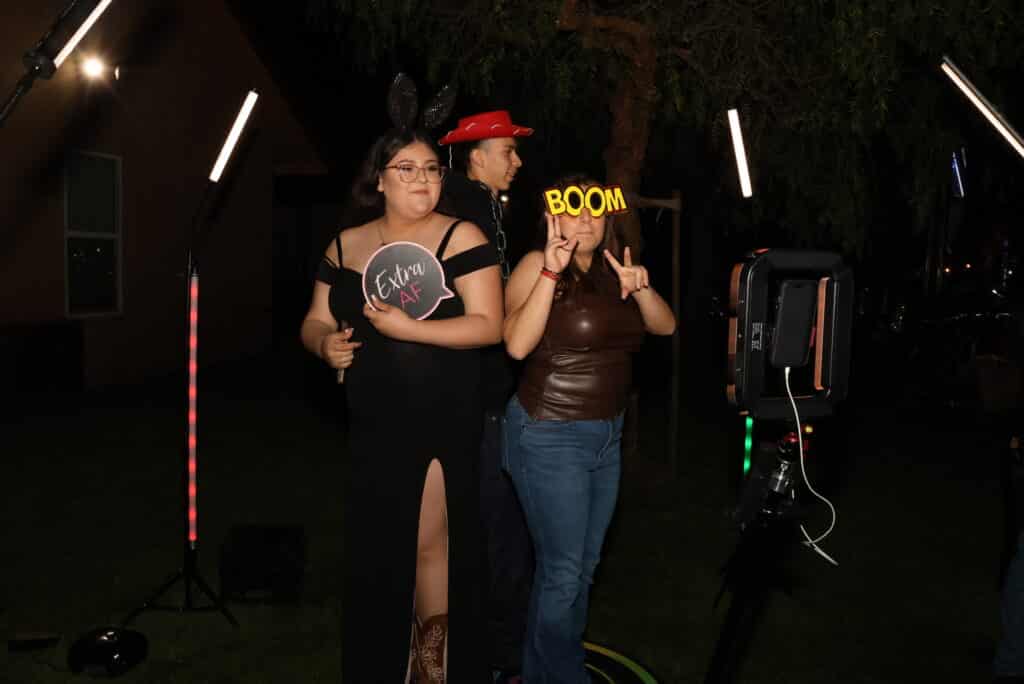
For example, a branded photo activation can invite someone to create a photo, GIF, or other piece of content. The attendee then provides an email or phone number to receive the finished asset. You have captured an opt-in lead while the attendee has received something they wanted.
This approach is especially useful for trade shows, conferences, product launches, corporate events, and brand activations where you need to attract attention without pulling people away from the event itself.
For a Central Valley event, you can also consider how your activation fits the venue and audience. Events can have very different layouts and attendee flows, so your lead capture setup should be designed around the actual environment rather than treated as a one-size-fits-all booth.
Live Event Lead Generation Options That Reduce Friction
Live event lead generation does not require one particular technology. The best option depends on how much information you need, how quickly attendees need to move through the experience, and whether your priority is volume, qualification, or both.
QR Codes
QR codes are useful when you want attendees to initiate the interaction themselves. You can place them on signage, displays, photo outputs, table cards, or other branded materials.
The important part is what happens after the scan. A QR code that opens a long form creates friction. A short mobile-friendly experience with a clear reason for submitting information is much more likely to keep the interaction moving.
Badge Scanning
Badge scanning can be one of the fastest options at conferences and trade shows because attendees may already have information associated with their event badge. It reduces manual typing and allows your team to stay focused on conversation.
However, a badge scan does not automatically tell you whether someone is a strong prospect. You still need a way to record interest, buying stage, or next steps.
Short Forms
If you use a tablet or phone form, ask only for information you genuinely need. Name, company, email, and one useful qualification question can be enough for many activations.
You can collect more information later. Making someone complete a long form before receiving a giveaway or experience can turn an otherwise engaging interaction into an administrative task.
Interactive Experiences
Interactive experiences can combine engagement and data collection in one flow. Photo booths, games, quizzes, digital activations, and personalized content give attendees an immediate reason to participate.
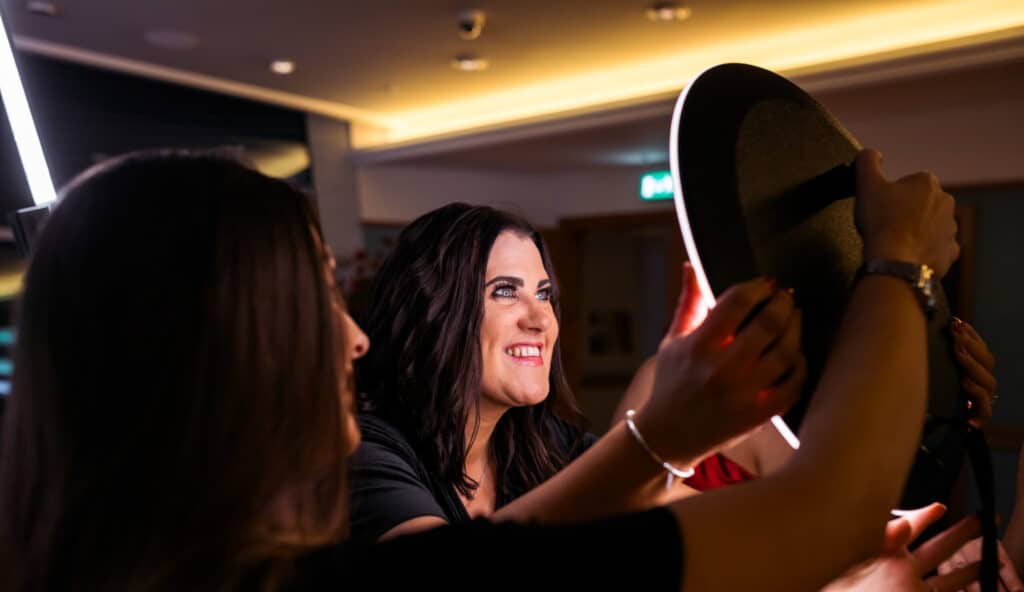
A branded photo experience is particularly useful because the attendee has a clear incentive to provide contact information: they want their finished content. You can also use branded layouts or digital delivery to keep your brand visible after the event.
How To Qualify Leads Without Interrupting The Experience
Qualification should feel like part of the conversation, not an interrogation. You can learn more about a prospect by asking a few relevant questions while they are already engaged with your team or activation.
Instead of opening with, “Can I get your email?”, start with the attendee’s reason for being there. Ask what brought them to the event, what they are currently working on, or what they are looking for.
For a B2B event, useful questions might include:
- What brought you to the event today?
- What are you hoping to solve?
- Are you currently evaluating solutions?
- What’s your expected timeline?
- Who else is involved in the decision?
You do not need to ask every question. Choose the 1 or 2 that will genuinely help you understand whether the person is a potential customer.
The information should then be recorded while the conversation is fresh. A lead record that contains a name and email but no context is much less useful than one that says what the attendee discussed and what they agreed to do next.
Build A Lead Capture Journey, Not A Form
The strongest event marketing lead generation systems connect attraction, engagement, capture, qualification, and follow-up. Each stage should feel like a continuation of the previous one.
A practical journey might look like this:
- Attract: Use a compelling visual, experience, demonstration, or offer to stop the right attendees
- Engage: Give the attendee something interactive to do
- Capture: Request the minimum information needed to deliver the value
- Qualify: Record relevant interests, role, timeline, or product needs
- Deliver: Provide the promised photo, content, prize, resource, or next step
- Follow up: Route the lead to the appropriate sales or marketing workflow
This structure prevents data collection from becoming the centerpiece of the interaction.
It also gives you better information about what happened. Modern experiential platforms can connect an activation with lead records and participation data, making it easier to understand which experiences generated engagement and which interactions produced stronger prospects.
What Does Event Lead Generation Cost?
There is no single market price for event lead generation because the cost depends on the capture method and the experience around it. A basic QR code form can require little technology or staffing, while a fully customized experiential activation can involve creative development, equipment, staff, content production, data capture, and reporting.
For that reason, avoid comparing providers based only on the headline rental price.
Ask what is included in the proposed activation. You may need to account for:
- Experience design and customization
- Photo, video, game, or interactive technology
- Branding and creative production
- On-site staff
- Lead capture software
- Badge or QR integrations
- Internet or backup connectivity
- Content delivery
- Data export or CRM integration
- Reporting and post-event analytics
- Setup and teardown
If you are comparing experiential marketing providers in the Central Valley, request an itemized proposal based on your event format, expected attendance, activation hours, and lead-generation objectives.
How To Choose The Right Lead Capture Approach
Choose the capture method based on your attendee journey rather than choosing technology first. A busy trade show booth may benefit from badge scanning and a fast interactive experience, while a smaller brand activation may get better results from a personalized photo experience and QR delivery.
Consider these questions before booking:
- How quickly does each attendee need to move through the experience?
- Do you need contact information, qualification data, or both?
- Will attendees use their own phones?
- Does the system work if venue connectivity is unreliable?
- Can your team add notes or qualification tags?
- Where does the data go after the event?
- Can you export or integrate the information with your existing workflow?
- What reporting will you receive afterward?
- Who is responsible for operating the technology during the event?
You should also ask how the provider handles attendee consent and data. Your capture process should clearly explain what information is being requested and why, especially when you plan to use it for future marketing.
Central Valley Considerations For Live Events
Your Central Valley event setup should account for venue flow, audience type, and how much time attendees have available. At venues such as the Fresno Convention & Entertainment Center in Downtown Fresno, a lead capture experience for a busy expo may need a different layout from one designed for a smaller corporate gathering.
For a high-traffic trade show, position your activation where attendees can easily see it without creating a bottleneck around registration areas, exhibit entrances, or major walkways. The Fresno Convention Center regularly hosts conventions and trade shows, while events such as Fresno Comic Expo demonstrate how quickly large crowds can move through an event space.
The same approach can work at the Big Fresno Fairgrounds in southeast Fresno, particularly during large public events such as the Big Fresno Fair. With hundreds of vendors and exhibitors, the fair creates plenty of opportunities for brands to use quick, interactive experiences that attract attention without requiring a long time commitment.
For corporate events at venues around Downtown Fresno, Tower District, Fig Garden, or the Fresno State area, you may have more flexibility to create a slower, more personalized lead capture experience. Attendees who are already networking may be more willing to complete a short form, scan a QR code, or interact with an experiential activation.
Connectivity should also be part of your planning. If your experience relies on QR delivery, cloud-based forms, or CRM syncing, ask your provider what happens if the venue’s Wi-Fi becomes unreliable. For busy expos and large events, an offline-capable capture system can help prevent connectivity issues from turning into lost lead information.
Common Mistakes to Avoid
Your capture process can undermine an otherwise excellent activation if it creates unnecessary friction. The following mistakes are preventable with better planning:
- Asking for contact information too early: Starting with a form can make the interaction feel like a sales pitch, so give attendees a clear reason to engage first
- Using overly long forms: Too many fields slow the experience and increase abandonment, so collect only information that supports your follow-up
- Collecting leads without qualification: A large contact list is less useful if you cannot identify genuine interest, so capture one or two meaningful qualification points
- Ignoring the attendee experience: A slow queue or confusing interface can damage engagement, so test the complete journey before the event
- Treating every lead the same: A curious attendee and a ready-to-buy prospect need different follow-up, so use tags or notes to identify intent
- Waiting too long to follow up: Event conversations lose context quickly, so route and review leads promptly while the interaction is still fresh
- Measuring only lead volume: A large number of scans does not necessarily mean strong performance, so track qualified conversations, meetings, opportunities, and downstream results
Frequently Asked Questions
What Is Event Lead Generation?
Event lead generation is the process of identifying and collecting information from potential customers during a live event. It can include QR codes, badge scanning, forms, conversations, demonstrations, games, photo experiences, and other interactive activities. The objective is to create useful contacts that can be qualified and followed up after the event.
How Do You Capture Leads At A Live Event?
You can capture leads through badge scanners, QR codes, short digital forms, interactive games, product demonstrations, or branded photo experiences. The most effective approach gives attendees a clear reason to participate before requesting information. Keep the process short, explain the value of the exchange, and capture only information you can use.
How Do You Qualify Event Leads?
You qualify event leads by combining contact information with useful context about the attendee. Ask a small number of natural questions about their needs, role, timeline, or interest in your offering. Recording this information during the conversation helps your sales team prioritize leads and personalize follow-up after the event.
Are Photo Booths Good For Event Lead Generation?
Photo booths can support event lead generation when the photo or digital content provides a genuine incentive for participation. An attendee can create a branded image and provide contact information to receive it digitally. This makes the data exchange part of the experience instead of requiring a separate sales interaction.
How Many Fields Should An Event Lead Form Have?
There is no universal number, but a short form is generally easier to complete during a busy live event. Start with the information you genuinely need, such as name, company, and email, then add only qualification fields that have a clear purpose. You can gather additional information during the conversation or later.
How Quickly Should You Follow Up With Event Leads?
You should review and prioritize leads as soon as possible after the event, with high-interest prospects receiving the fastest attention. Your follow-up should reference the actual interaction rather than sending a generic message. Notes about the attendee’s needs, questions, and agreed next step make follow-up more relevant.
What Should You Measure Besides The Number Of Leads?
You should measure the quality and business value of the leads, not just the number collected. Useful measures can include qualified conversations, meetings scheduled, opportunities created, conversion rates, pipeline influenced, and revenue. Tracking participation alongside lead quality can also show which experiences attracted attention without producing meaningful prospects.
Turn Event Lead Generation Into A Better Attendee Experience
The next step is to design your event lead generation around what attendees actually want to do, receive, and experience.
At Luna Events, we create interactive photo and video activations for Central Valley events, with customizable experiences designed around your audience and event goals. Our approach combines engaging experiences, quality production, personalized branding, and event technology to help you create meaningful interactions without making attendees feel like they’re filling out a sales form.
If you’re planning a corporate event, trade show, brand activation, or other live experience in the Central Valley, let’s create an activation that gets people excited to participate, helps your brand stand out, and turns meaningful interactions into lasting connections.